

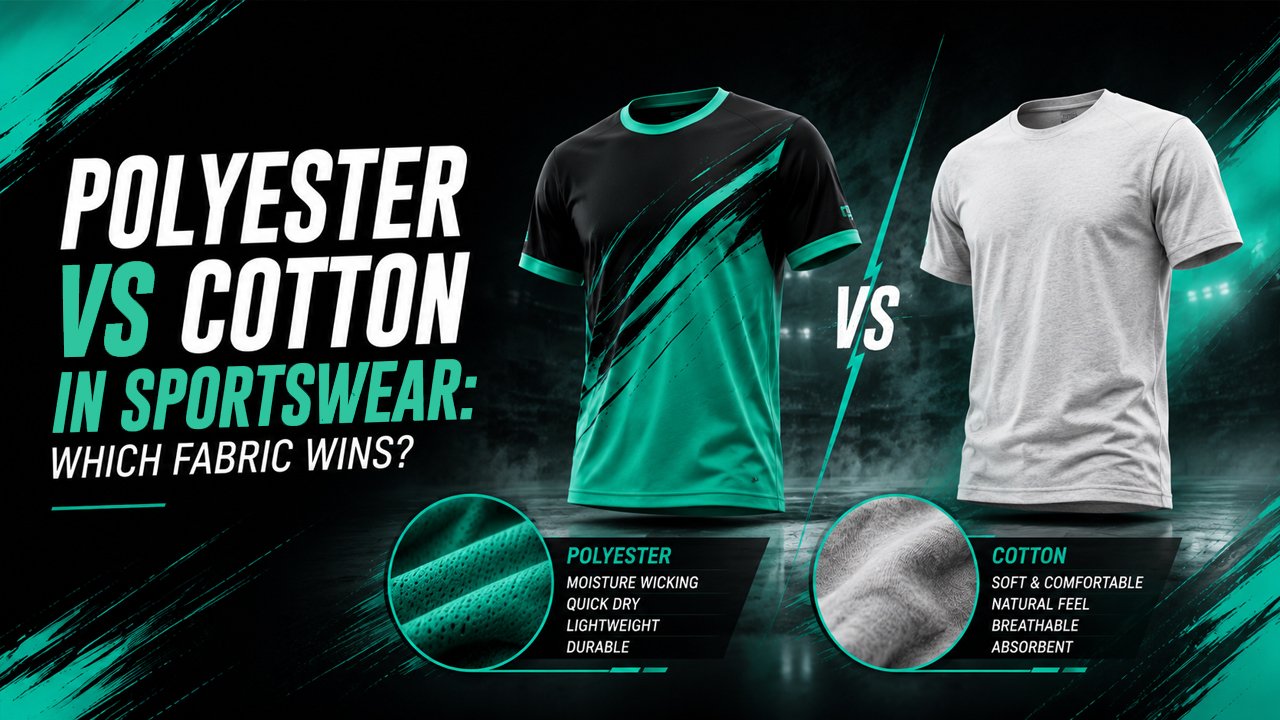
Comparing polyester vs cotton in sportswear? See real moisture-absorption data, durability figures, sport-by-sport picks, and wash-care guidance.
Polyester vs Cotton in Sportswear: Which Fabric Wins?
Comparing polyester and cotton in sportswear? See real moisture-absorption data, durability figures, sport-by-sport picks, and wash-care guidance.
Grab any jersey off a team rack and check the label. Chances are it says polyester, not cotton. The fabric a uniform is made from changes how heavy a shirt feels by minute eighty, whether it still smells clean after a double training session, and whether it holds its shape after twenty washes. For clubs, schools, and sportswear brands buying uniforms in bulk, this isn’t a minor detail — it’s the difference between gear that lasts three seasons and gear you’re replacing every few months.
At Noxico International we manufacture custom sublimated sportswear for teams and brands worldwide, and this question comes up constantly. Below is the actual data behind the polyester-versus-cotton debate — moisture regain figures, shrinkage rates, and sport-by-sport recommendations — not just opinion.
Why Fabric Choice Matters for Sportswear Performance
A jersey isn’t just something a logo gets printed on — it’s part of the equipment. Fabric determines how quickly sweat clears the skin, how much a garment stretches and recovers with movement, and whether colours and prints stay sharp wash after wash. Get the fabric wrong and the effect isn’t just discomfort; a soaked, heavy shirt genuinely slows an athlete down and a faded kit undercuts a team’s presentation on matchday.
What Is Polyester Fabric?
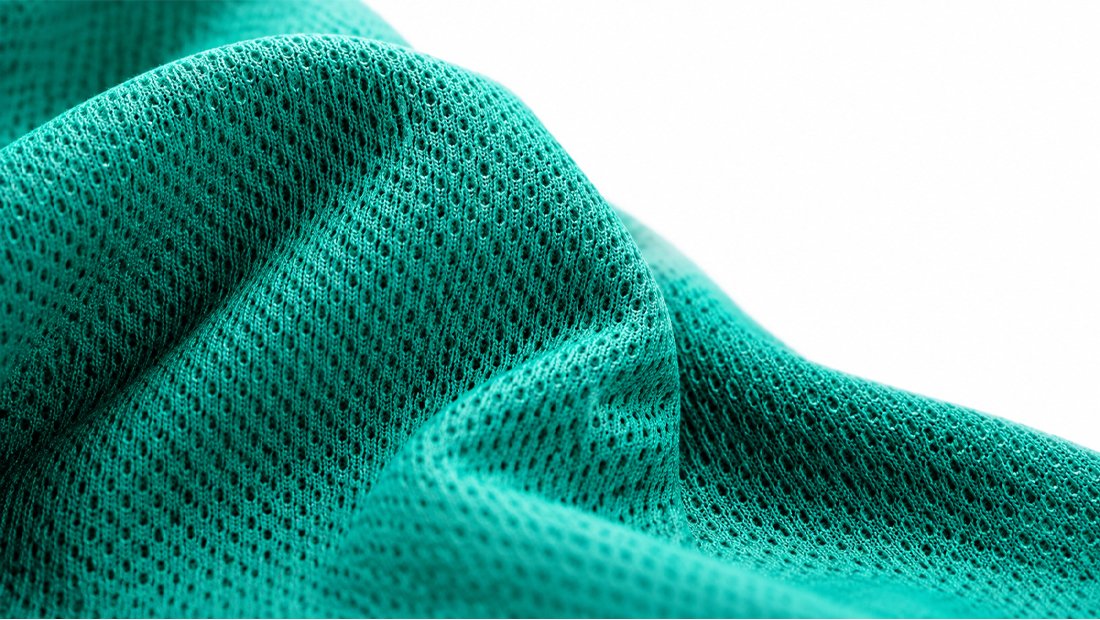
Polyester is a synthetic fibre made from petroleum-based polymers, developed in the 1940s and now the most widely used fibre in sportswear. Because it’s synthetic, its weave, weight, and finish can be engineered for a specific job — wicking, stretch, or airflow. The key figure is moisture regain: standard polyester absorbs roughly 0.4% of its own weight in moisture under standard test conditions, compared with cotton’s roughly 7–8.5%[1][4]. That’s the entire reason sweat sits on the surface of a polyester garment and evaporates instead of soaking in. The industry also uses recycled polyester (rPET) made from post-consumer plastic — global rPET production reached roughly 15.7 million metric tons in 2022, about 15% of total polyester output, according to Textile Exchange’s fibre market report[3].
What Is Cotton Fabric?
Cotton is a natural cellulose fibre harvested from the cotton plant and used in textiles for thousands of years. It’s soft, breathable, and hypoallergenic, which is why it remains the default for t-shirts and casual gym wear. Under standard atmospheric test conditions (roughly 65% relative humidity, 21°C), cotton’s moisture regain — the amount of moisture a fibre holds relative to its own dry weight — sits at approximately 7–8.5%[1][4]. That’s a different measurement from total water absorption capacity: fully saturated, cotton fibre can hold several times its own weight in liquid water, which is a separate figure from regain and explains why a soaked cotton jersey feels dramatically heavier than a dry one[1]. Regain feels comfortable at rest. Under sustained sweat production it becomes the fabric’s biggest limitation, because cotton holds that moisture rather than releasing it to the surface.
Polyester vs Cotton in Sportswear, Point by Point
Breathability
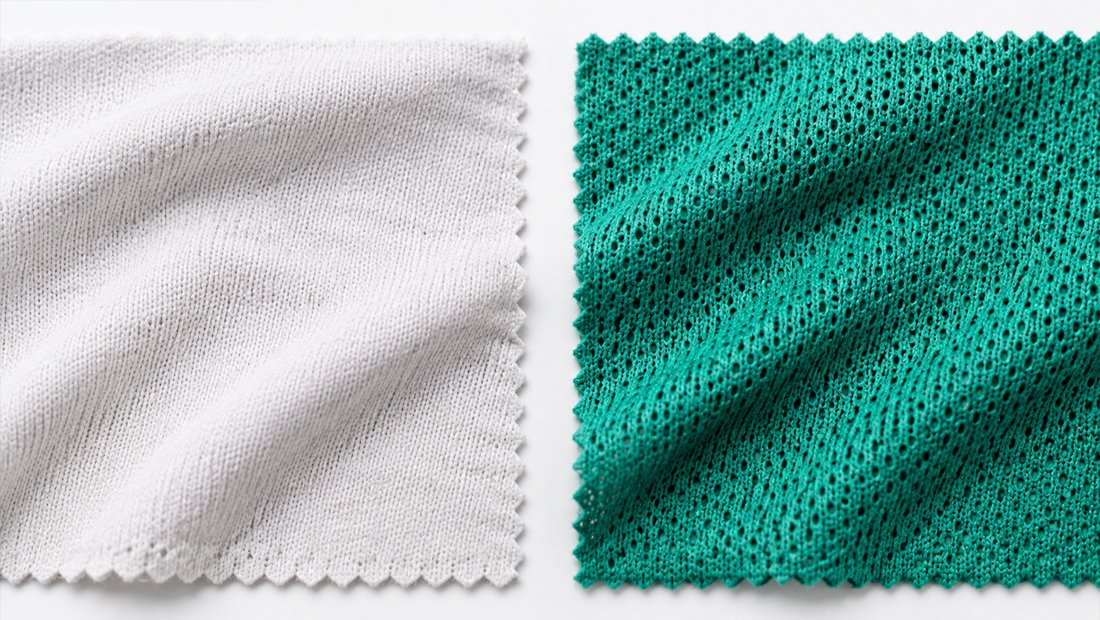
Cotton’s loose weave lets air pass through naturally, so a plain cotton tee feels cool the moment you put it on. Raw polyester is less breathable on its own, which is why sportswear manufacturers almost never use it plain — it gets knitted with mesh panels and perforated zones specifically to move air across the skin during movement. Cotton wins at rest; engineered polyester tends to catch up, and often overtakes it, once heart rate climbs.
Moisture Regain and Sweat-Wicking
This is the technical core of the debate. Textile science measures a fibre’s moisture regain — the percentage of its dry weight it absorbs under standard humidity. Cotton sits at roughly 7–8.5%; polyester sits at roughly 0.4%[1][4]. In practice that means a cotton jersey keeps absorbing sweat as a match goes on, gaining noticeable weight and clinging to skin, while a polyester jersey pushes that same sweat to the outer surface, where airflow evaporates it. Laboratory comparisons of sweat-soaked textiles have measured cotton retaining substantially more residual moisture than polyester after a set drying period[1].
Durability and Shrinkage
A team uniform needs to survive a full season of matches, sprints, and washes. Independent fabric guides put cotton shrinkage at up to 5% after washing if it isn’t pre-shrunk or is washed in warm water, while polyester typically shrinks less than 1%[2]. Polyester’s fibre strength also makes it far more resistant to the sublimation process’s heat, which is why the dye bonds permanently into the fibre instead of sitting on top — a big part of why sublimated polyester kits don’t crack or peel the way screen-printed cotton often does.
Bacteria, Odour, and Hygiene
This one has a counterintuitive angle worth knowing: comparative research on sweat-inoculated fabric has found that while cotton holds more moisture overall, polyester’s hydrophobic surface can allow more bacteria to adhere and survive on the fabric itself, because bacteria tend to stick more readily to hydrophobic surfaces[1]. In practice, most sportswear brands offset this by adding antimicrobial finishes to performance polyester — worth checking for on any uniform spec sheet, since not all polyester fabric includes it by default.
Drying Time
Because cotton fibres hold water internally rather than on the surface, they take longer to dry both on the body and on the washing line. Polyester’s low moisture regain means less water to begin with, so it dries measurably faster in both situations — a real factor for teams training twice a day or travelling between fixtures with limited turnaround time.
Comfort on Skin
Cotton has a soft, familiar hand-feel and is gentle on sensitive skin at rest. Once it’s wet, that same softness becomes a heavy, clinging sensation. Modern high-filament and brushed polyester has closed much of this gap versus the stiffer polyester of decades ago, while still keeping the moisture control cotton can’t match.
Comparison Chart
| Metric | Cotton | Polyester |
|---|---|---|
| Moisture regain (standard test conditions) | ~7–8.5%[1][4] | ~0.4%[1][4] |
| Typical shrinkage after wash | Up to 5%[2] | Under 1%[2] |
| Drying speed | Slow, stays damp | Fast, stays light |
| Sublimation print retention | Poor — fades, cracks | Excellent — permanent |
| Typical GSM for jerseys | 160–200 GSM | 140–220 GSM |
| Best suited to | Casual wear, low-intensity | Competitive sport, uniforms |
Moisture regain and shrinkage figures are lab-tested textile science averages, not manufacturer claims. See References for sources.
Best Fabric by Sport
Fabric needs shift depending on the sport’s intensity, contact level, and climate. Here’s how it typically breaks down for teams sourcing uniforms:
- Football / Soccer: High-intensity, 90+ minutes — full polyester, 140–160 GSM mesh-knit for airflow. See soccer uniforms.
- Basketball: Fast, indoor, high sweat rate — lightweight 140–150 GSM polyester. See basketball uniforms.
- American Football / Rugby: Contact sports need heavier, more durable fabric — 180–220 GSM polyester. See American football uniforms and rugby uniforms.
- Cricket: Long match duration, variable weather — mid-weight 160–180 GSM polyester with UV-aware finishing. See cricket uniforms.
- Gym / Training / Compression: Close-fit, high stretch recovery — polyester-spandex blend. See compression shirts and fitness & running wear.
- Warm-up Jackets / Off-field Wear: Comfort matters more than wicking — cotton-poly blend is acceptable. See running jackets.
Fabric Weight (GSM) Guide
GSM (grams per square metre) tells you how heavy and dense a fabric is, and it matters as much as fibre type. Lighter GSM breathes better and dries faster but offers less opacity and durability; heavier GSM holds up to contact and cold but traps more heat.
| GSM Range | Feel | Typical Use |
|---|---|---|
| 130–150 GSM | Ultra-light, sheer | Running, basketball, hot-climate matches |
| 150–180 GSM | Balanced weight | Soccer, cricket, general team kits |
| 180–220 GSM | Heavier, more opaque | American football, rugby, cold-weather sport |
| 220+ GSM | Thick, structured | Tracksuits, warm-up jackets, outerwear |
Wash & Care Instructions
Fabric choice only pays off if the uniform is cared for correctly. Get this wrong and even the right fabric underperforms.
- Polyester kits: Machine wash cold (30°C), no fabric softener (it clogs wicking pores), air dry or low-heat tumble, wash inside-out to protect sublimated print.
- Cotton or cotton-blend items: Wash cold to limit the up-to-5% shrinkage risk[2], avoid high-heat drying, expect more frequent ironing to manage creasing.
- Both: Avoid chlorine bleach on printed areas — it breaks down sublimation dye and cotton dye alike.
Cost Comparison
Raw polyester yarn is generally cheaper to produce at scale than cotton, since it’s manufactured rather than farmed and isn’t subject to crop yield or weather variability. However, the bigger cost factor for teams isn’t the raw fibre — it’s replacement frequency. A cotton jersey that shrinks, fades, or stretches out of shape within a season typically needs replacing sooner than a polyester uniform holding its shape and colour over two to three seasons, which usually makes polyester the lower total cost per season even where the unit price looks similar.
Certifications to Look For
When sourcing sportswear fabric, especially for export or youth sports use, it’s worth asking your manufacturer about:
- OEKO-TEX Standard 100: Tests fabric for harmful substances and is one of the most recognised textile safety certifications for apparel sold internationally.
- GRS (Global Recycled Standard): Verifies recycled content claims on rPET polyester fabric.
- Fabric composition labelling: Confirms the actual polyester/cotton/spandex percentage rather than a generic “performance fabric” label.
Why Noxico International Builds Uniforms on Polyester
Nearly every jersey, uniform, and compression piece we manufacture starts with a polyester base — usually our Quick Dri high-filament fabric. Beyond the moisture-regain numbers above, polyester takes full sublimation printing far better than cotton because the dye bonds into the fibre itself rather than sitting on top, so a design survives repeated competitive-season washing. It also lets us tune weight, stretch, and wicking speed per sport, which is why we manufacture separate fabric specs for basketball, ice hockey, and tennis kits rather than one generic cloth for everything.

Cotton-Polyester Blends: Where They Fit
For categories that sit between performance wear and casual wear — hoodies, joggers, warm-up jackets — a cotton-polyester blend is a reasonable middle ground, adding cotton’s softness while keeping some of polyester’s durability. For anything worn during actual competition, a higher polyester percentage, or full polyester, remains the stronger technical choice based on the moisture and durability data above.
Frequently Asked Questions
Is polyester or cotton better for sportswear?
Polyester is generally better for competitive sportswear because its moisture regain is roughly 0.4%, compared with cotton’s standard regain of about 7–8.5%, so it dries faster, resists shrinkage, and holds sublimated print colour through repeated wash cycles.
Why don’t professional teams wear cotton jerseys?
Cotton fibres hold onto sweat instead of releasing it to the surface, so a cotton jersey gets heavier and stays damp through a match, while polyester’s low moisture regain keeps players drier and lighter.
Is a cotton-polyester blend good for sportswear?
Blends work well for casual training wear, hoodies, and lounge pieces where softness matters more than performance. For competitive match-day kits, a higher polyester content still performs better.
Does polyester sportswear shrink like cotton does?
No. Polyester typically shrinks less than 1% after washing, compared with cotton, which can shrink up to 5% if washed in warm water without pre-shrinking treatment.
What GSM is best for team uniforms?
Most sublimated polyester team uniforms use fabric between 140 and 220 GSM. Lighter 140–160 GSM suits running and basketball, while 180–220 GSM suits football, rugby, and cold-weather sports.
Bottom Line
Cotton and polyester aren’t built for the same job. Cotton is comfortable and soft for casual wear, but its 7–8.5% moisture regain works against it the moment sweat production rises. Polyester’s near-zero moisture regain, faster drying time, sub-1% shrinkage, and permanent sublimation retention are why teams and sportswear brands consistently specify it for competitive uniforms — and why Noxico International builds every uniform on performance-engineered polyester, manufactured in-house in Sialkot. Whether you’re outfitting a youth club or launching a professional-grade sportswear line, matching fabric weight and fibre to the sport is where the decision actually starts.
Want Your Team’s Uniform Built on the Right Fabric?
Get a free, no-obligation quote from Noxico International today.
Get a Free QuoteReferences
- Rosenblum, J. et al. “Physicochemical Properties of Cotton and Polyester Textiles” — moisture retention and bacterial adhesion comparison. ResearchGate
- Szoneier Fabrics. “Cotton vs. Polyester: Professional Guide” — moisture absorption and shrinkage figures. szoneierfabrics.com
- Textile Exchange. “Preferred Fiber & Materials Market Report 2023” — recycled polyester (rPET) production volumes. textileexchange.org
- AATCC / ASTM standard moisture regain reference values for textile fibres (cotton, wool, polyester) — standard test method for moisture regain of textile materials, conditioned at 65% RH and 21°C.