
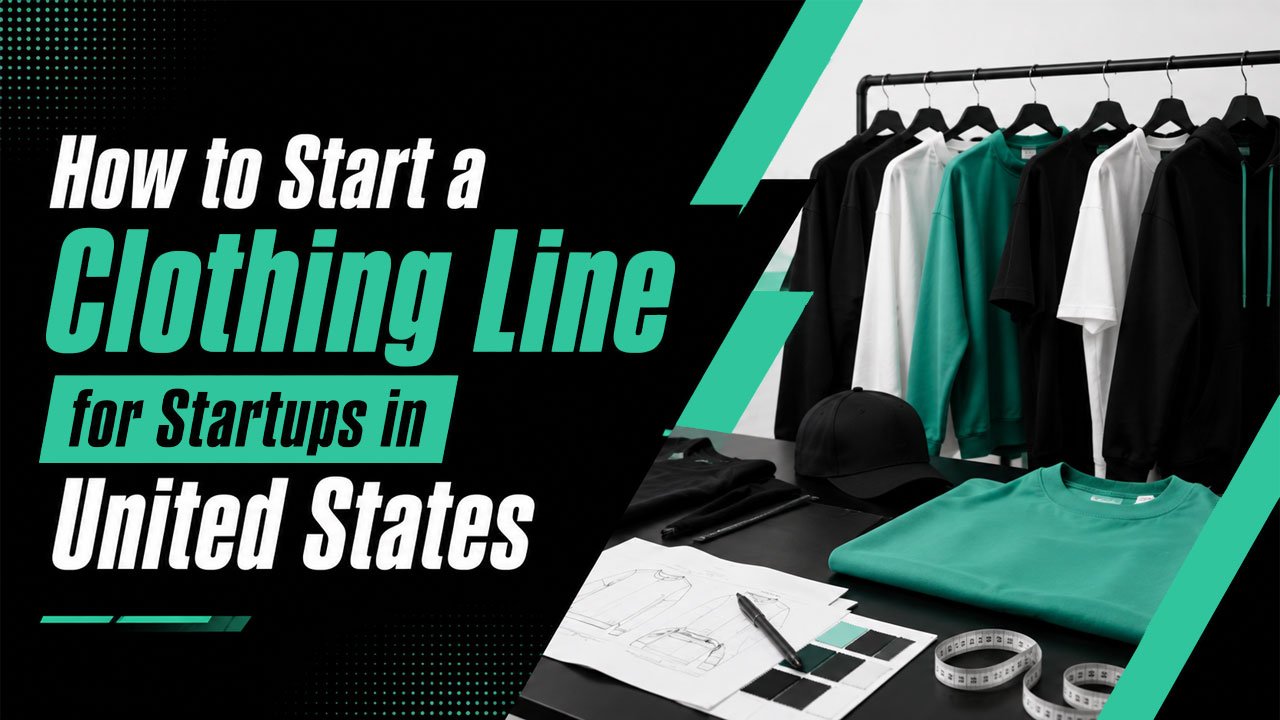
Planning to launch a clothing brand? This step-by-step guide helps US startups go from idea to first sale — covering planning, sourcing, branding, and marketing.
How to Launch a Clothing Line: A Startup Guide for the United States
Planning to launch a clothing brand? This step-by-step guide helps US startups go from idea to first sale — covering planning, sourcing, branding, and marketing.
Launching a clothing line feels thrilling right up until you actually sit down to build one. First there’s a sketch, a color palette, a name you’re proud of. Then, almost overnight, you’re buried in spreadsheets, supplier back-and-forth, and dozens of small decisions you didn’t see coming. That’s completely normal — nearly every founder who has ever built a brand from scratch has been through the same fog early on.
This guide is written for US-based startups who want to do it properly, without burning cash on mistakes that were easy to avoid. We’ll cover the full path: choosing your niche, understanding your customer, sketching out a simple plan, budgeting honestly, getting your first samples made, shaping your brand, and landing your first sale. By the end, you’ll have an actual roadmap instead of a loose idea floating around in your head.
A clothing line isn’t just merchandise — it’s a business, a story, and a relationship with the people who choose to wear it. Approach it that way from the start, and your brand stands a real shot at making it past year one, which is exactly where most new labels quietly disappear.
What Launching a Clothing Line Actually Involves
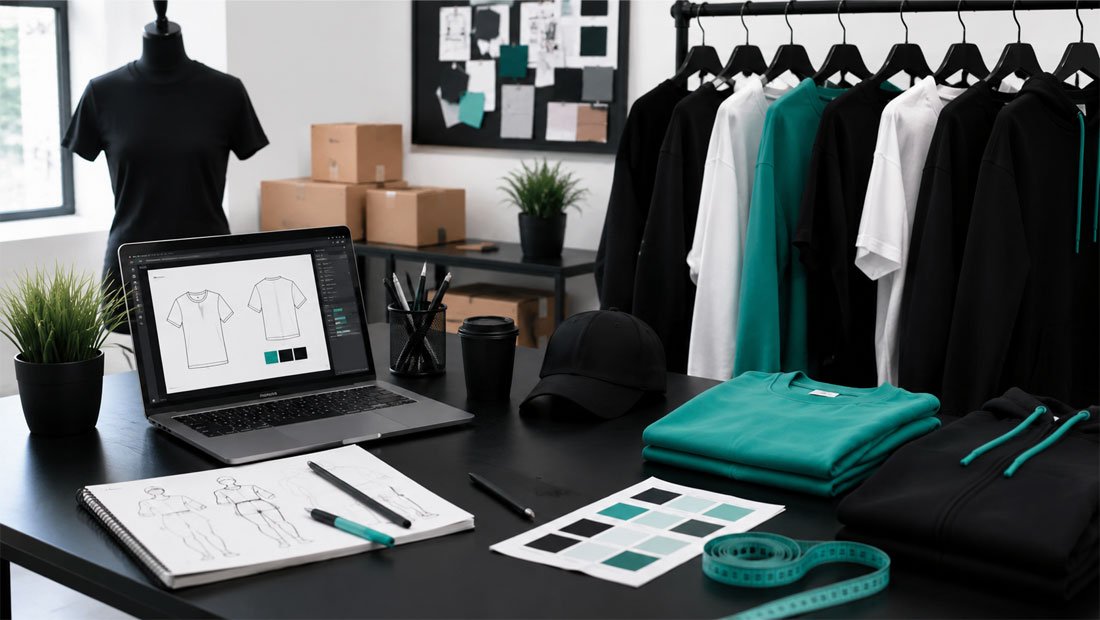
Before getting into logistics, it’s worth being clear on what a clothing line even is. It’s a connected set of apparel products that share one identity — that could be a color story, a specific customer, a message, or a use case like activewear, streetwear, or workwear.
A lot of first-time founders confuse “one product” with “a line.” Selling a single hoodie design isn’t a clothing line yet. A real line needs at least a small, cohesive set of pieces so a visitor understands what the brand is about within seconds of landing on the store. That doesn’t mean you need twenty SKUs on day one — four or five well-considered pieces can absolutely carry a first launch, as long as they feel like they belong together.
US startups often skip this part in the rush to get live. Blank tees with a random print slapped on don’t read as a brand, no matter how fast they ship. Customers can sense the difference between something rushed and something built with intention, even if they can’t articulate why.
Picking Your Niche Before You Build Anything
Every clothing line that gains traction starts with a niche, not a product. Knowing exactly who you’re designing for tells you what to make, how to price it, and where to sell it.
Before you sketch a single piece, sit with these questions:
- Who’s currently frustrated with what’s already on the market?
- What lifestyle, sport, profession, or identity is this brand actually speaking to?
- What can you offer that a big retail chain simply can’t?
A line built for powerlifters needs different fabric, sizing, and messaging than one built for remote workers who want loungewear that still looks put-together. A line for new parents doesn’t talk the same way as one for college students. The niche shapes everything that follows, so don’t rush past it just to get to the fun part.
Startups that go broad — “clothes for everyone” — tend to struggle. A tightly defined audience is easier to market to, easier to price for, and easier to grow, because every decision has a clear filter to run through.
Getting to Know Your Target Customer
Once you’ve settled on a niche, the next move is understanding the real people inside it. This doesn’t need a big budget or a research team.
A few low-cost ways to learn about your future customer:
- Scroll through what similar audiences complain about and comment on across social media
- Read the reviews left on brands already selling to your target group
- Run a quick Instagram poll or a short Google Form survey
- Have direct conversations with five to ten people who fit your target profile
Note their age bracket, income level, where they currently shop, and what would pull them toward your brand over an existing option. This profile becomes your reference point for nearly every decision going forward — from pricing to how your product photos should look.
Putting a Simple Plan on Paper
You don’t need a fifty-page business plan to get moving, but you do need something written down. Without one, a brand tends to drift, spend without direction, and lose focus within a few months.
A working plan for a startup clothing line should touch on:
- The gap and the opportunity. What problem does your line solve, and why does now make sense?
- Your customer. Who, specifically, is this brand built for?
- The product lineup. What’s actually going into the first collection?
- Pricing and margins. What does each piece cost to make, and what will it sell for?
- Sales channels. Own website, marketplaces, wholesale, or a combination?
- Marketing. How will your first customers actually hear about you?
- The money side. How much do you need to launch, and how long can you run before turning a profit?
Keep it short enough that you’ll actually go back and reread it. A plan that lives forgotten in a drawer isn’t worth much. One you revisit monthly becomes an actual decision-making tool.
Legal & Registration Basics in the US
Before selling apparel publicly, even at a small scale, US founders need to handle a few legal fundamentals.
- Pick a business structure. Most new founders start as a sole proprietor or single-member LLC. An LLC adds personal liability protection, which starts to matter once you’re signing supplier agreements and shipping to customers.
- Register your business name. Check availability at the state level, and separately search the United States Patent and Trademark Office if you plan to trademark your brand name down the road.
- Get an EIN. An Employer Identification Number from the IRS is typically required to open a business bank account, even before you hire anyone.
- Look into labeling and safety requirements. Apparel sold in the US has specific rules around fiber content labels, country-of-origin labels, and care instructions. If children’s items are part of the plan, safety and flammability standards apply and are worth researching early.
- Check if a seller’s permit is required. Many states require a sales tax permit before you can legally sell taxable goods like clothing, so confirm your state’s specific rule before going live.
None of this requires a lawyer from day one, but skipping it entirely tends to create expensive headaches once real revenue starts coming in.
Budgeting: The Real Numbers
Startup budgets swing widely depending on the model chosen, but founders deserve honest figures instead of vague reassurance.
A lean launch using print-on-demand or small local batches can sometimes get off the ground with a few hundred to a few thousand dollars, covering samples, a basic site, and early marketing. A mid-sized line producing its own original designs in small runs usually needs somewhere between three thousand and fifteen thousand dollars once samples, first production, packaging, and launch costs are all in. A more ambitious launch with a larger first run and a fuller collection can climb well past twenty thousand dollars.
Line items to plan for in your budget:
- Sample development and revision rounds
- First production run
- Packaging and branded materials
- Website build and product photography
- Early marketing and paid ad tests
- Business registration and any required permits
- Shipping and fulfillment supplies
Marketing is where most new founders underestimate cost. Making the clothes is often the more straightforward half of the job. Getting the first hundred strangers to actually buy from a brand nobody’s heard of yet is usually the harder, pricier part.
Design, Sampling & Finding a Production Partner
This is the stage where an idea becomes a physical product. A few paths exist here, and each suits a different kind of founder.
- Print-on-demand. Great for testing a concept with almost no inventory risk upfront, though margins run thin and design flexibility is limited.
- Small-batch production partners. A solid fit once demand is validated and you want more say over fabric, fit, and branding, generally with lower minimum order quantities than large-scale manufacturing.
- In-house production. Full creative control, best suited to founders with sewing or pattern-making skills who want a hands-on, small-run label.
Whichever route you take, put together a tech pack for every item before reaching out to a production partner. A tech pack is a straightforward document laying out measurements, fabric, color codes, stitching details, and trims. It cuts down on guesswork and dramatically reduces back-and-forth on your first samples, saving both time and money.
Always test a physical sample before greenlighting a full production run. Try it on real bodies that match your target customer, wash it, wear it through a full day, and see how it holds up. Skipping this step is how brands end up with expensive quality problems after launch — problems that are far costlier to fix once product is already in customers’ hands.
Fabric Choices & Quality Benchmarks
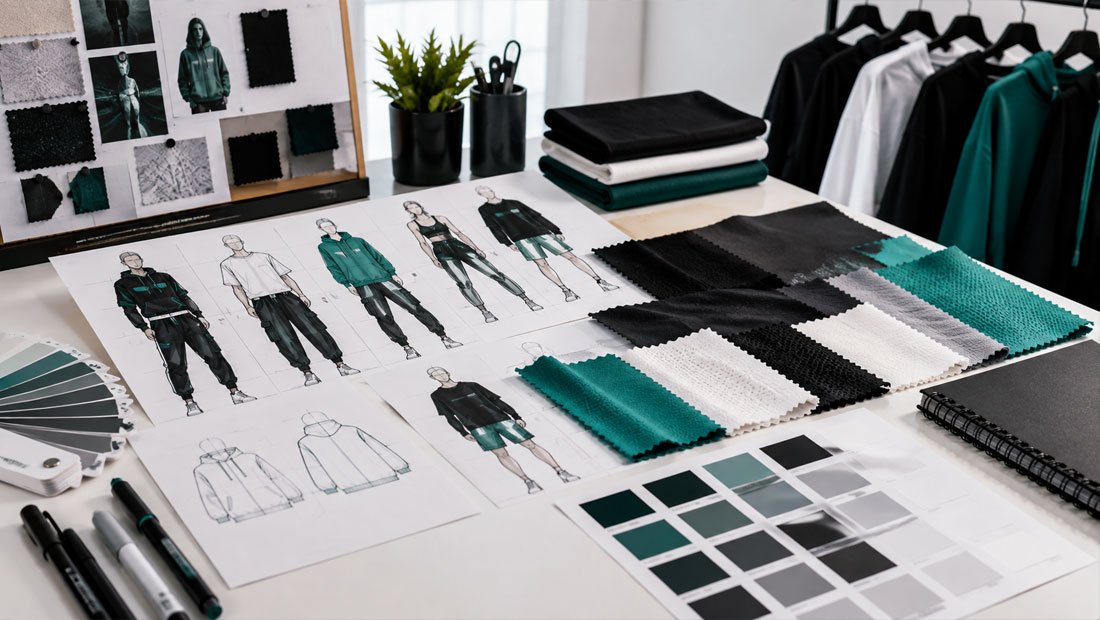
Fabric quietly defines a brand’s entire personality — often more than the design itself. A streetwear label might lean on heavyweight cotton for a structured, premium hand-feel. An activewear line needs moisture-wicking, stretch-ready performance fabric. A loungewear brand might put softness above everything else.
Set quality benchmarks early and write them down — stitch density, seam strength, colorfastness after washing, sizing tolerance. These become the checklist you and your production partner both reference, so every batch matches the standard set by the first sample, not just the first one.
Cutting corners on fabric to shave a little off per-unit cost is one of the most common regrets among new founders. Customers pick up on fabric quality immediately, and one bad batch can generate reviews that follow a brand for years.
Building Your Brand Identity
Branding is what turns a stack of clothes into a label people actually remember and talk about. That covers your name, logo, color palette, typography, packaging, and the voice you use across your site and social channels.
Steps for building a clear identity:
- Write a short brand story explaining why the label exists and who it’s for
- Pick a name that’s easy to spell, easy to say out loud, and available as both a business name and a domain
- Design a simple, versatile logo that reads well small on a tag and large on a storefront banner
- Choose two to four brand colors and one or two fonts, then stick with them everywhere
- Settle on a tone of voice — playful, minimal, bold, elevated — and use it consistently across every product description
Consistency beats perfection here. A brand with a simple, repeated identity reads as more trustworthy than one with gorgeous individual pieces that feel disconnected from each other.
Building an Online Store
Most new US labels launch primarily through an online store since it requires far less upfront investment than a physical retail location.
Platforms like Shopify, WooCommerce, and similar ecommerce builders can have a functional store live within days. Focus your energy on:
- Clear, high-quality photography that shows fit, fabric texture, and true color
- Detailed product descriptions covering sizing, materials, and care instructions
- A simple, mobile-friendly checkout, since most shoppers are browsing from their phones
- An accurate size chart — sizing confusion is one of the biggest drivers of apparel returns
Before going live, order your own product as a test customer. Walk through browsing, checkout, and unboxing start to finish. Anything that annoys you as the founder will annoy real customers even more.
Getting the Word Out
A brand doesn’t sell itself just because it exists. Marketing is what actually connects your line with the people who were already looking for something like it.
- Social media presence. Instagram, TikTok, and Pinterest are where most brand discovery happens today. Share the story behind your line, behind-the-scenes production footage, and real customers wearing your pieces.
- Build an email list. Start collecting emails before launch. A pre-launch waitlist gives you a warm audience ready to buy on day one instead of starting from zero.
- Influencer and community partnerships. Micro-influencers inside your exact niche often outperform broad, expensive campaigns run through large accounts that don’t match your audience.
- Paid advertising. Once you have a handle on your numbers, small test budgets on social ads can help uncover a repeatable acquisition channel.
- Community engagement. Join online communities relevant to your niche and take part genuinely rather than only pushing products. Trust builds sales over time.
Track what actually works for your specific brand instead of copying another label’s playbook exactly. What works for a streetwear line targeting teens will likely flop for a professional workwear brand targeting adults in their forties.
Mistakes Worth Avoiding
Learning from other founders’ missteps is a lot cheaper than repeating them yourself. Some of the most common ones seen across new launches:
- Launching with too many products before validating demand for any of them
- Skipping the sample and wear-testing stage to save time
- Underpricing the line and struggling to cover real costs
- Ignoring sizing consistency, which drives up return rates
- Spending the whole budget on production and leaving nothing for marketing
- Picking a niche too broad to market effectively
- Chasing trends instead of building a distinct identity
A brand that sidesteps even half of these already has a stronger footing than most first-time launches.
Why Founders Choose Noxico International
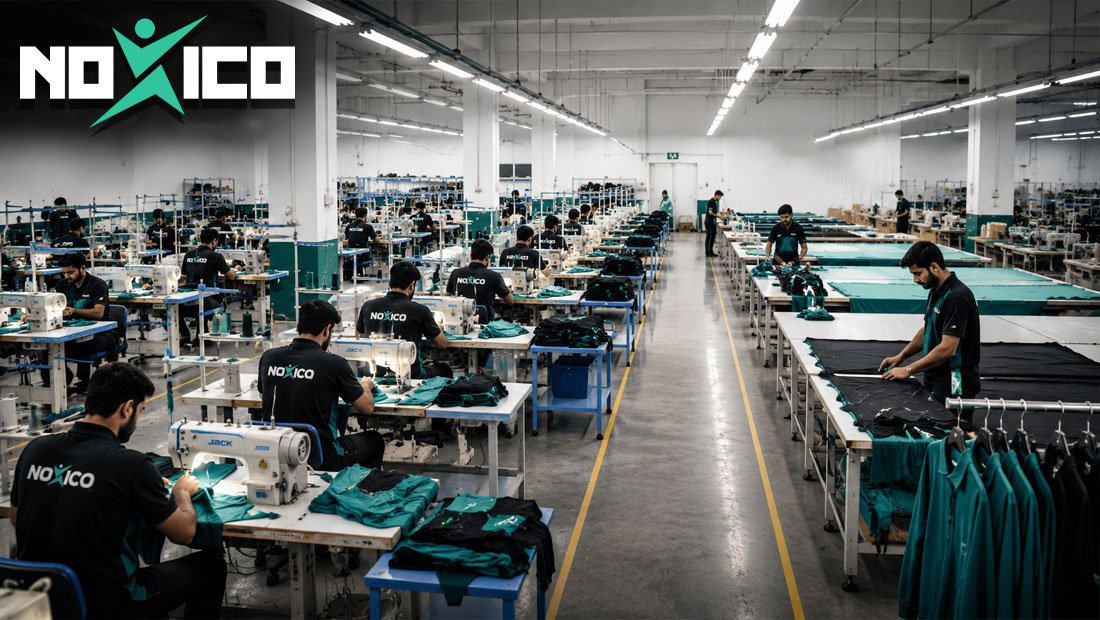
Once you hit the sampling and production stage, choosing the right partner matters more than almost any other decision you’ll make. This is where Noxico International comes in.
Noxico International has been producing sportswear, team wear, and leisure wear since 2009, working factory-direct with startups and established brands that need a dependable manufacturing partner. Being factory-direct means there’s no middleman marking up your order or muddying communication between you and the team actually cutting and sewing your pieces. You work directly with the people producing your line, which keeps pricing honest and communication clear.
Here’s how Noxico supports a new brand from first sample through shipment:
- Low minimum order quantities. Founders don’t need to commit to thousands of units just to test an idea. Noxico works with startups still validating their line and needing smaller, manageable first runs.
- In-house sampling and design support. Send a sketch, a reference photo, or even a rough concept, and the team turns it into a real sample in your chosen fabric, fit, and print or embroidery method.
- Reliable quality control. Every piece goes through fabric checks, stitching checks, and finishing checks before it ships. Noxico holds recognized certifications backing up its quality standards, so a new brand isn’t gambling on unverified claims.
- A wide range of customization. Sublimation printing, screen printing, embroidery, custom labels, and custom packaging are all available, so a line can look fully branded from its very first order.
- Worldwide shipping. Noxico ships finished orders to clients across the globe, including startups based in the US, with clear timelines communicated upfront so a launch date can actually be planned around.
- A responsive, direct process. Questions about fabric weight, sizing, or timelines get answered by the production side itself, not filtered through layers of sales reps who don’t understand garment construction.
If you’re a startup still figuring out where your line will actually get made, Noxico International offers exactly the kind of transparent, factory-direct partnership described throughout this guide: honest pricing, testable samples, and consistent quality your brand can build a reputation on.
Frequently Asked Questions
What’s a realistic budget for launching a clothing line?
It comes down to the model you pick. A bare-bones launch using print-on-demand or small local batches can get moving for a few hundred to a few thousand dollars. A brand building its own original designs for a full first drop generally needs somewhere in the three-thousand-to-fifteen-thousand-dollar range once you factor in samples, production, packaging, and marketing.
Is a business license required to sell a clothing line?
Almost always, yes. US-based founders generally need to set up a business entity like an LLC, obtain an EIN from the IRS, and confirm whether their state requires a seller’s permit before offering apparel for sale.
How many items should a first collection include?
There’s no magic number, but four or five tightly connected pieces are typically plenty for a debut launch. A cohesive, focused drop beats a sprawling catalog every time.
Is it better to manufacture domestically or partner with an overseas factory?
Neither path is universally right — it depends on budget, minimum order quantities, and how hands-on you want to be with fabric sourcing. A lot of startups lean toward an overseas, factory-direct partner since it usually means lower minimums and healthier margins than small domestic runs, without giving up quality.
How much time does it take to get a clothing line to market?
Counting from the first sample to launch day, most startups need roughly two to six months, depending on how many sample rounds are needed and how fast the store and marketing pieces come together.
What’s the most common mistake first-time founders make?
Pouring the entire budget into production and leaving nothing for getting the word out. A clothing line needs a good product AND a real plan for putting it in front of the right people.
Final Thoughts
Launching a clothing line as a US startup is entirely doable, but it rewards patience and planning over sheer speed. The founders who make it aren’t usually the ones who moved fastest — they’re the ones who understood their customer, tested before scaling, and stayed consistent with their brand long enough for people to actually notice.
Your line doesn’t need to be flawless on day one. It needs to be clear, well-made, and built around a real audience that genuinely wants what you’re offering. Nail those three things, and everything downstream — marketing, growth — gets a lot easier to figure out.
Take the next step today: write down your niche, sketch your first three pieces, and open the conversation with a production partner. That’s how every clothing line, no matter how big it eventually gets, actually begins.
Ready to Turn Your Clothing Line Into a Real Product?
Get a free, no-obligation quote from Noxico International today.
Get a Free Quote