

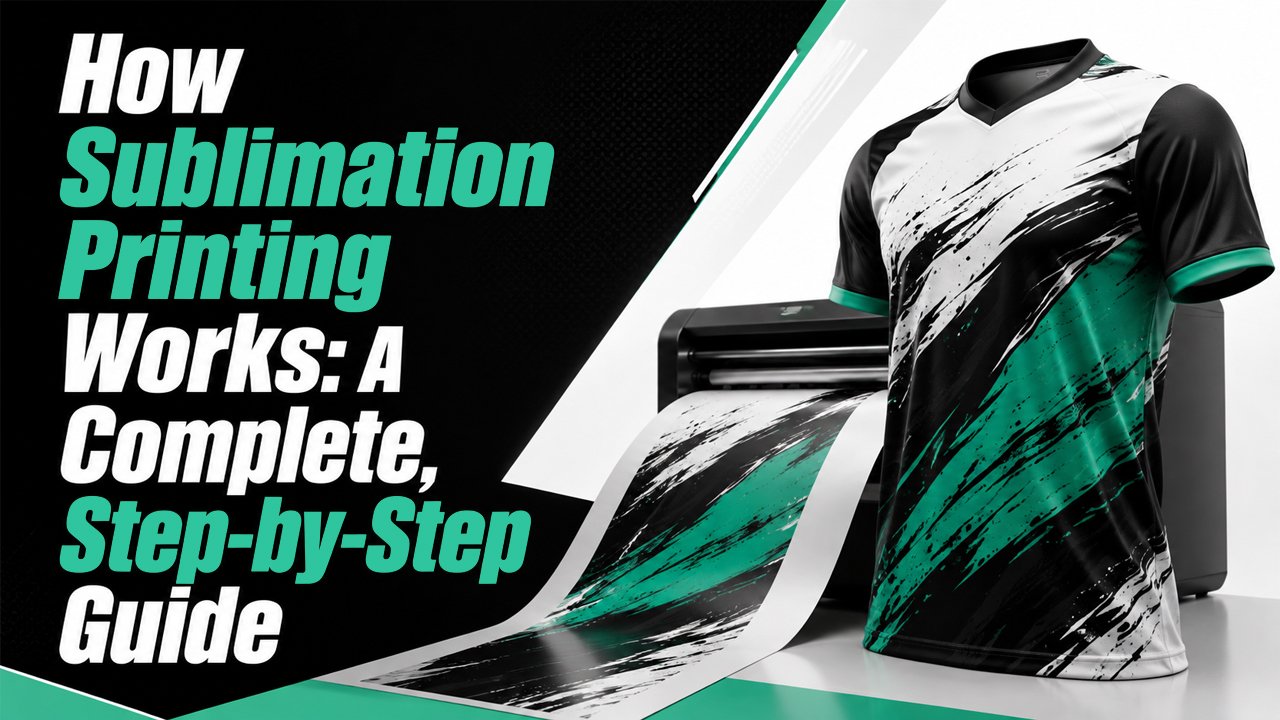
Curious how sublimation printing works? Here is a simple, complete breakdown of the process, from design file to finished fabric, explained in plain language.
How Sublimation Printing Works: A Complete, Step-by-Step Guide
Curious how sublimation printing works? Here is a simple, complete breakdown of the process, from design file to finished fabric, explained in plain language.
If you have ever held a printed jersey and wondered why the design feels like it is actually part of the fabric instead of sitting on top of it, you have already come face to face with sublimation printing without realizing it. A lot of buyers hear the term thrown around by manufacturers and printers, but very few actually understand how sublimation printing works from start to finish.
This guide is going to change that. We are going to walk through exactly how sublimation printing works, step by step, in plain and simple language, no confusing chemistry lectures, no unnecessary jargon. By the time you finish reading, you will understand what happens to the ink, why the fabric matters so much, why the colors stay vibrant for years, and why this method has become the go-to choice for sportswear, team uniforms, and custom apparel around the world.
Whether you are a business owner sourcing custom sportswear from Noxico International, a designer curious about the technical side of production, or someone simply trying to understand how sublimation printing works before placing an order, this article covers everything you need to know.
What Is Sublimation Printing, Exactly?
Before we get into how sublimation printing works mechanically, let’s define it properly. Sublimation printing is a digital printing method that uses heat and pressure to turn solid ink into a gas, which then bonds permanently with the fibers of a fabric. Instead of ink sitting on the surface of the material the way regular printing does, the design actually becomes part of the fabric itself.
The word “sublimation” comes from a basic science concept: a substance moving directly from a solid state to a gas state without ever becoming a liquid in between, similar to how dry ice behaves. That single idea is the foundation of the entire process, and it is the reason sublimated prints do not crack, peel, or fade the way surface-level prints eventually do.
Now let’s break down exactly how sublimation printing works, one stage at a time.
How Sublimation Printing Works: Step by Step
Understanding how sublimation printing works becomes much easier once you see it broken into clear stages. While different manufacturers may use slightly different machines, the core process stays the same everywhere in the world.
Step 1: Design Preparation
Every sublimation project starts with a digital design file. This could be a logo, a full jersey pattern, a photo, or detailed artwork with gradients and multiple colors. The file is usually prepared as a high-resolution image or vector file and then processed through RIP (Raster Image Processing) software.
This software does a lot of the heavy lifting behind how sublimation printing works at a technical level. It manages color profiles, resolution, and print layout so that what appears on screen matches what eventually appears on the fabric. Getting this step right matters a lot, because sublimation is a digital process, and the printer will reproduce exactly what it is given, mistakes included.
Step 2: Printing the Design onto Transfer Paper
Once the design file is ready, it gets printed onto special sublimation transfer paper using a sublimation printer loaded with sublimation ink, typically in CMYK (cyan, magenta, yellow, and black) combinations. At this stage, the ink is only sitting on the surface of the paper. It has not yet touched the actual fabric.
This is an important part of understanding how sublimation printing works: the transfer paper acts purely as a carrier. The image printed on it is essentially a mirror version of the final design, waiting to be transferred onto the real material.
Step 3: Placing the Paper on the Fabric
Next, the printed transfer paper is placed directly on top of the fabric or product that will receive the design. For apparel like jerseys, uniforms, or fitness wear, this fabric is almost always polyester or a polyester-heavy blend, since sublimation ink only bonds properly with synthetic fibers.
The paper and fabric are aligned carefully and secured together so nothing shifts before the next stage, which is where the real transformation in how sublimation printing works actually takes place.
Step 4: Heat and Pressure Application
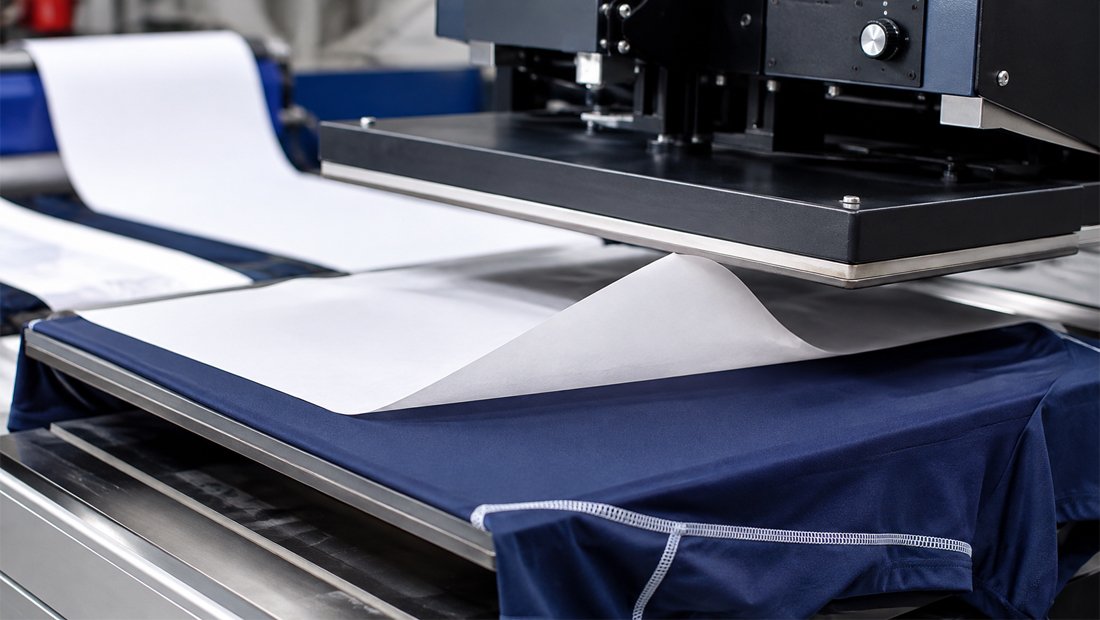
This is the heart of the entire process. The paper and fabric are fed together into a heat press or, for large-scale manufacturing, a calendar heat transfer machine. Under high temperature, usually somewhere between 180°C and 210°C (roughly 356°F to 410°F), combined with steady pressure for anywhere from 30 seconds to a couple of minutes depending on the material and machine, something remarkable happens.
The solid sublimation ink converts directly into a gas. It never becomes a liquid at any point. This gas then penetrates the open fibers of the polyester fabric, which have expanded slightly due to the heat.
Step 5: Bonding and Cooling
As the fabric cools down, its fibers contract again, and the gas that entered during the heat stage turns back into a solid, but this time it is locked inside the fabric structure itself rather than sitting on the surface of the paper. This is the exact moment that defines how sublimation printing works differently from every other printing method. The color is not printed on the fabric; it becomes the fabric.
Once cooling is complete, the transfer paper is peeled away, revealing a finished design that is now a permanent part of the material.
Step 6: Quality Check and Finishing
The final stage in how sublimation printing works at a production level involves quality control. Manufacturers check for color accuracy, sharpness, and any inconsistencies before the fabric moves on to cutting, sewing, and final garment assembly. In serious manufacturing setups, operators also monitor paper tension, feed speed, and temperature stability throughout the run, since even small fluctuations can affect the final print quality.
The Science Behind How Sublimation Printing Works
It helps to slow down for a moment and look at the actual physics behind how sublimation printing works, because this is the part most articles skip over too quickly. In everyday life, most materials move through three states in a predictable order: solid, then liquid, then gas. Sublimation ink breaks that pattern entirely. Under the right heat and pressure, it jumps straight from a solid state to a gas state, skipping the liquid phase completely.
This matters a lot in practice. Because there is no liquid stage, there is no ink pooling, smearing, or bleeding into the fabric the way a wet dye might. The gas molecules spread evenly and settle directly into the open fiber structure, which is a big part of why sublimated prints come out so sharp and precise, even for fine details like small text or thin gradient lines. Once the heat source is removed and the fabric starts cooling, the same reaction happens in reverse. The gas turns back into a solid, except now it is trapped inside the fiber rather than sitting on the paper it started on. Understanding this reverse-sublimation step is really the key to understanding how sublimation printing works from a scientific standpoint, not just a manufacturing one.
Why Does Sublimation Printing Only Work on Polyester?
A big part of understanding how sublimation printing works is understanding why fabric choice matters so much. Sublimation ink needs open, receptive fibers to bond with, and polyester fibers open up perfectly under heat and close back down as they cool, effectively trapping the ink gas inside.
Cotton and other natural fibers do not behave the same way. Their structure does not expand and lock in the same manner, which means sublimation ink simply will not hold properly on cotton. This is why sublimation is almost always paired with polyester, polyester blends, or specially coated polymer surfaces on hard products like mugs or phone cases.
Fabric color also plays a role. Sublimation works best on white or light-colored fabric because the ink is transparent when it turns to gas. On dark fabric, the base color shows through and distorts the final result, which is why sublimated designs are almost always applied to light or white base materials.
Why the Sublimation Process Produces Such Durable Prints
Once you understand how sublimation printing works at the fiber level, the durability makes complete sense. Because the ink becomes part of the fabric structure instead of sitting on top of it, there is no separate layer that can crack, peel, or flake off over time.
This is a major reason sublimation has become the standard choice for sportswear and team uniforms. Athletic clothing goes through constant stretching, sweating, and washing, and a surface-level print simply cannot survive that kind of repeated stress the way a sublimated print can. Since the design lives inside the fibers rather than on the surface, the fabric also keeps its original breathability and moisture-wicking properties, which matters a great deal for performance clothing.
Sublimation Printing on a Large Manufacturing Scale
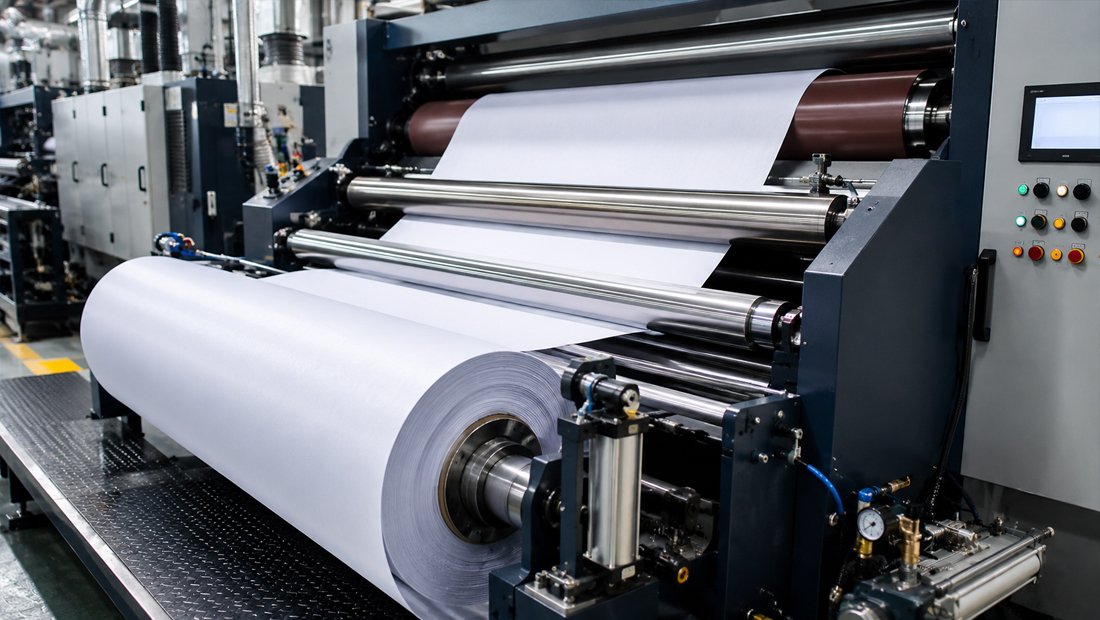
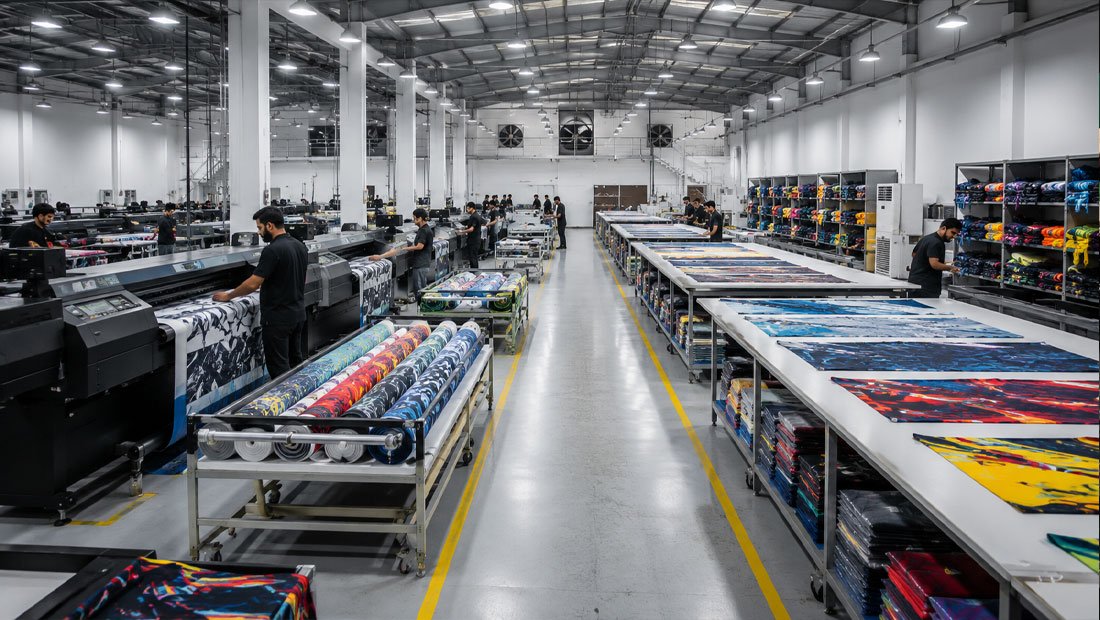
While a small heat press can sublimate a single t-shirt at a time, large manufacturers use a different setup entirely to understand how sublimation printing works at scale. Industrial operations use large-format sublimation printers to print rolls of transfer paper continuously, followed by calendar heat transfer machines that feed both the paper and fabric roll through heated rollers at a controlled speed.
This setup allows factories to sublimate meters of fabric in a continuous process rather than pressing individual pieces one at a time. It is far more efficient for producing bulk orders of custom sportswear, team kits, and uniform fabric, while still delivering the same permanent, vibrant results as smaller-scale sublimation.
Paper quality, ink consistency, and machine calibration all become much more important at this scale. A slight tension imbalance in the paper feed, for example, can cause blurred edges or uneven color across a large production run, which is why experienced manufacturers monitor these details closely throughout the process.
Advantages That Come From How Sublimation Printing Works
Once you see the full mechanics behind how sublimation printing works, its advantages start to make a lot more sense.
- Vibrant, long-lasting color: Since the dye bonds at a fiber level, colors stay bright and sharp for the life of the garment, without cracking or fading from repeated washing.
- Full, all-over coverage: Because there are no screens or stencils involved, sublimation can print edge-to-edge, seam-to-seam, across an entire garment, including sleeves and side panels.
- Unlimited colors and detail: Since the process works digitally, adding more colors or intricate gradients does not add extra cost or complexity the way it would with other printing methods.
- No texture change: The fabric keeps its original hand-feel, stretch, and breathability, since there is no extra layer of ink sitting on top of it.
- Efficient for various order sizes: Sublimation does not require expensive setup like screens or stencils, which makes it practical for both smaller custom orders and large bulk production runs.
Common Limitations Worth Knowing
To fully understand how sublimation printing works, it also helps to know where its limits are.
Sublimation only works well on polyester or polyester-coated materials, so it is not a fit for cotton apparel. It also performs best on light or white fabric, since the ink cannot mask a dark base color the way opaque inks can. Lastly, it cannot produce raised or textured effects like glitter or puff prints, since the ink becomes flat and embedded rather than sitting on the surface.
None of these limitations make sublimation a weaker method. They simply define where it performs best, which is almost always sportswear, performance apparel, and all-over printed products made from synthetic fabric.
Sublimation Printing vs Other Printing Methods
It also helps to briefly place sublimation next to other common printing techniques, since this is often where buyers get confused about how sublimation printing works compared to alternatives like screen printing or direct-to-garment printing.
| Method | Where the Ink Sits | Best For |
|---|---|---|
| Sublimation | Bonds into the fiber — no surface layer | Polyester sportswear, all-over designs, unlimited colors |
| Screen Printing | Sits on top, printed layer by layer per color | Bold logos, cotton/dark fabric, large bulk orders |
| Direct-to-Garment (DTG) | Sprayed onto the surface via inkjet | Small-run custom prints on varied fabrics |
Screen printing pushes ink through a stencil onto the surface of the fabric, layer by layer for each color. It creates a slightly raised texture and works on almost any fabric, but it struggles with fine detail and gradients, and it is not cost-effective for small orders. Direct-to-garment printing, another common method, sprays ink directly onto fabric using inkjet technology, which also leaves the ink sitting on the surface rather than bonding within the fibers.
Sublimation is different from both because there is no physical layer of ink left on top of the fabric at all. That single distinction, more than anything else, explains how sublimation printing works so differently and why it produces results that other methods simply cannot match for full-color, all-over, long-lasting designs on synthetic fabric.
How Sublimation Printing Works for Sports Uniforms Specifically
Sportswear is really where the mechanics of how sublimation printing works shine the brightest. Team jerseys need bold colors, sponsor logos, player names, and numbers, often spread across the entire garment with zero blank spaces. Sublimation handles this effortlessly because the design is not limited to a printable “area” the way stencil-based methods are.
On top of that, athletic fabric needs to stay breathable and stretchable no matter what gets printed on it. Since sublimated ink becomes part of the fiber rather than a separate coating, the fabric’s performance properties stay fully intact even after the design is applied. That is exactly why sublimation has become the standard printing method for soccer kits, basketball uniforms, running gear, and fitness apparel across the sportswear industry.
Equipment Involved in the Sublimation Process
To fully picture how sublimation printing works, it also helps to know what equipment is actually involved at each stage. None of this needs to be memorized by a buyer, but it does help explain why quality can vary so much between manufacturers.
- Sublimation printers: Specialized inkjet printers loaded with sublimation ink cartridges. Unlike regular printers, they are built to handle the specific ink formulation used in this process, and larger industrial versions can print wide rolls of transfer paper continuously.
- RIP software: Sits between the design file and the printer, controlling color accuracy, ink density, and print resolution. This step is often overlooked by buyers but plays a huge role in how sharp and accurate the final print turns out.
- Sublimation transfer paper: Acts as the carrier for the ink before it reaches the fabric. Paper quality affects color release, meaning cheap or inconsistent paper can leave patchy, uneven results even with good ink and a good printer.
- Heat presses or calendar heat transfer machines: Where the actual transformation happens. Smaller operations use flat heat presses for individual garments, while large-scale manufacturers use calendar machines that pass continuous rolls of paper and fabric through heated rollers at a steady, controlled speed.
Every one of these components has to work together correctly for the process to produce a clean, accurate, long-lasting result. A weak link anywhere in this chain, whether it is outdated equipment, poor paper quality, or inconsistent temperature control, shows up directly in the finished fabric.
Tips for Buyers Ordering Sublimated Sportswear
If you are sourcing custom sportswear and want to make sure you are getting a properly executed sublimation job, there are a few practical things worth asking your manufacturer about.
- Ask what fabric weight and composition they use, since 100% polyester or a high-polyester blend gives the strongest results.
- Ask about their color-matching process, since consistent CMYK calibration prevents colors from shifting between production batches.
- Ask to see samples of previous work up close, since a well-sublimated garment should feel completely smooth, with no texture or stiffness where the design sits.
Knowing how sublimation printing works gives you the confidence to ask the right questions and spot the difference between a manufacturer cutting corners and one that genuinely understands the process from design file to finished garment.
Why This Matters When You Order Custom Sportswear from Noxico International
At Noxico International, understanding how sublimation printing works is not just theory for us, it is the foundation of everything we manufacture. Every custom jersey, uniform set, and fitness garment produced in our Sialkot facility goes through this exact process, from design preparation and transfer printing to controlled heat pressing and quality inspection.
Because we manage the entire sublimation process in-house, factory-direct, we can guarantee the same result every single time: vibrant colors, permanent prints that will not crack or peel, and fabric that still performs the way athletes need it to. If you are placing a custom order and want to know exactly how sublimation printing works for your specific design, our team is always happy to walk you through fabric samples, color options, and production timelines.
Frequently Asked Questions
How long does it take for sublimation ink to bond with fabric?
The actual heat press stage usually takes between 30 seconds and a couple of minutes, depending on the fabric and machine used, though larger industrial setups run continuously rather than pressing individual pieces.
Can sublimation printing be reversed or removed?
No. Since the ink becomes part of the fabric fibers rather than sitting on the surface, sublimated prints cannot be removed or reversed once the process is complete.
Does sublimation printing work on cotton t-shirts?
No, sublimation ink needs synthetic fibers to bond with. Cotton does not have the right fiber structure, so sublimation is limited to polyester or polyester-blend fabrics.
Why does sublimation printing need light-colored fabric?
Because sublimation ink is essentially transparent when it turns to gas, a dark fabric base would show through and distort the final colors, which is why light or white fabric is required for accurate results.
Is sublimation printing environmentally friendly?
Generally yes. The process produces very little waste, uses dry inks rather than heavy water-based chemicals, and only applies ink to the exact areas needed for the design.
Conclusion
Now that you know exactly how sublimation printing works, from digital design file to permanent, fiber-level bonding, it becomes much easier to understand why this method has become the standard for sportswear, uniforms, and all-over printed apparel. The entire process comes down to one simple but powerful idea: turning solid ink into gas and locking it into the fabric itself, rather than leaving it sitting on top.
If you are planning your next custom sportswear order and want a manufacturer that understands how sublimation printing works at every stage of production, Noxico International is ready to bring your design to life with factory-direct quality and pricing.
Ready to Put This Process to Work on Your Uniforms?
Get a free, no-obligation quote from Noxico International today.
Get a Free Quote